Double-O status
Casino RoyaleDouble-O status is the Service designation James Bond says he earned after two operations requiring him to kill in cold blood. It grants him a reputation for toughness, but the events at Royale complicate that identity: Le Chiffre turns the language of heroic play against him, his injuries leave him uncertain of his bodily powers, and Vesper’s concealed work for the enemy exposes the limits of his confidence in the role.
Qualification and Meaning
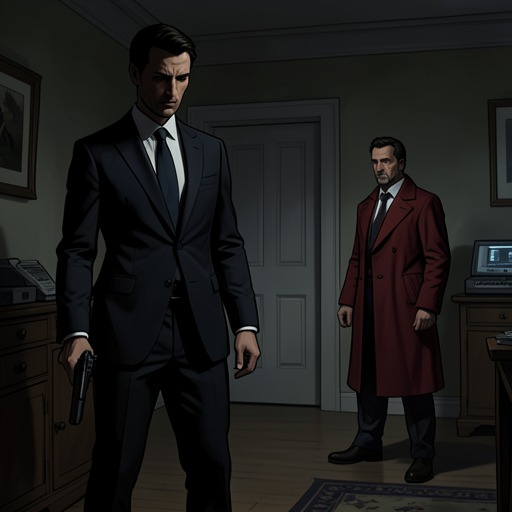
Bond explains that his Double-O number followed two killings. The first was a distant, comparatively clean operation; the second, in Stockholm, required him to kill a Norwegian agent who was working against the British and had helped expose two of their men. Because the second assignment had to be silent, Bond chose a knife, and the killing did not happen quickly. Together, the jobs earned him his designation and a reputation for being capable and tough.
Bond defines the number as evidence that an agent has killed someone in cold blood during an operation. The definition makes Double-O status more than a mark of professional standing: it records the point at which killing becomes part of the Service’s authorized work. At first Bond remembers the two assignments as proof of competence. Under questioning after his encounter with Le Chiffre, however, he treats the same record as a source of moral uncertainty.
The Hero and the Villain
During his recovery, Bond tells Mathis that Le Chiffre’s phrase “playing Red Indians” had stayed with him. He had once found it easy to sort the world into heroes and villains, and to imagine himself as a hero who killed villains. Le Chiffre’s violence reverses that simple arrangement: Bond finds himself cast as the villain in the enemy’s account, while he knows that he is not one.
Bond’s unease reaches beyond the immediate contest. Patriotism, he says, can make violence appear justified, but political labels and allegiances change with history. The people called heroes and villains can exchange parts as the cause changes. Double-O status therefore carries an unresolved contradiction: the Service recognizes killing as a qualification, while Bond’s experience has made him question the moral categories used to defend it.
The Body and Its Limits
The episode also unsettles the masculine self-command associated with Bond’s designation. Le Chiffre presents torture as a means of attacking not only the body but a man’s sense of himself, threatening the belief that he can retain his manhood under pressure. Bond’s later reflections show that the threat persists beyond the immediate ordeal: although his doctor expects his health and powers to return, Bond remains in pain and fears that the experience has damaged his capacity for sexual response.
That fear is not evidence that the designation has been revoked; it shows instead how little the number can protect its bearer from vulnerability. Bond’s status depends on a history of controlled lethal action, yet at Royale he confronts an assault designed to make control—and his assurance of masculine identity—seem precarious. During convalescence, Vesper’s companionship becomes a daily source of pleasure, while Bond waits anxiously to discover whether desire will return. Recovery thus tests a dimension of his self-image that the Double-O record cannot certify.
Exposure and Reassessment
At the end of the novel, Bond reconsiders Le Chiffre’s description of him as someone playing at war. He recognizes that, while he had been occupied with conspicuous, heroic action, the real enemy had been working quietly beside him. He pictures Vesper carrying documents on a tray and recognizes that his Double-O identity did not make him perceptive enough to see the espionage taking place close at hand.
The designation consequently acquires an ironic edge. It attests to Bond’s readiness to kill for the Service, but does not guarantee sound moral judgment, emotional invulnerability, or insight into betrayal. His response to Vesper’s revelation is shame followed by a renewed decision to pursue SMERSH. Double-O status remains part of his professional identity, but its meaning has shifted: rather than a simple badge of heroic toughness, it stands within a harder reckoning with the limits and costs of that identity.